
By Brett Wiler, Vice President of Economic Development and Strategic Planning
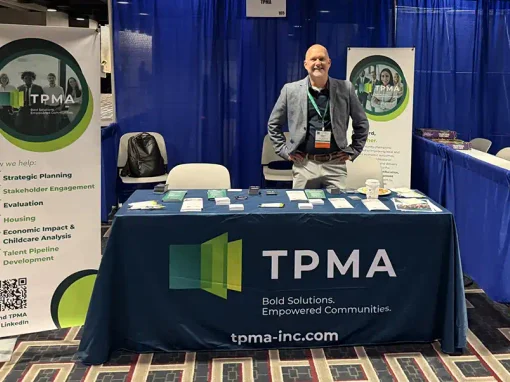
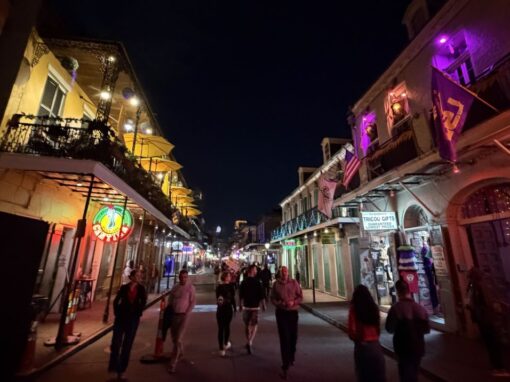
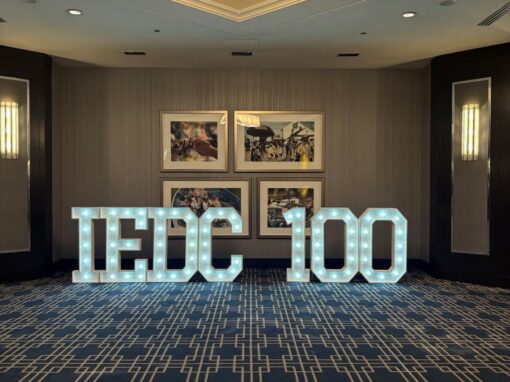
My colleagues and I spent a few days in New Orleans at the 2026 IEDC Annual Conference, catching up with old friends, meeting new faces, and talking about the opportunities and challenges facing communities across the country.
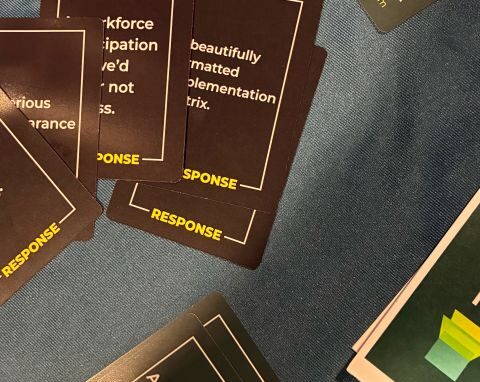
We also had fun introducing Economic Development: The Card Game, our attempt to capture the unpredictable, occasionally ridiculous, and always interesting world of economic development in a deck of cards. Because if you’ve spent enough time in this profession, you know that sometimes you just have to laugh at the hand you’re dealt.
Between the conference sessions, conversations over cocktails, a few rounds of cards, and some excellent New Orleans food, we picked up a few insights about where economic development headed.
Here are five things that stuck with us.
1. Economic developers are being asked to do more. With less. Naturally.
Remember when economic development was mostly about attracting businesses, supporting existing employers, and creating jobs?
Those days are long gone.
Today’s economic developers are being pulled into housing, childcare, workforce development, energy infrastructure, downtown revitalization, and just about everything else that makes a community economically competitive.
The catch? Most aren’t getting bigger budgets or more staff to match their expanding responsibilities.
The job description keeps growing. The resources? Not so much.
2. Leadership matters more than ever.
In an increasingly polarized world, economic development professionals have a real opportunity to step up as community leaders.
Economic developers occupy a unique position. They work across the public and private sectors, collaborate with people who don’t always agree, and generally keep their eyes on their communities’ long-term interests.
That’s a valuable skill set right now.
When finding common ground feels increasingly difficult, economic developers have an opportunity to bring people together around something most can agree on: building stronger, more prosperous communities.
Sometimes the most important thing an economic developer can do isn’t landing a project. It’s getting the right people in the same room.
3. Trust is hard to build and surprisingly easy to lose.
Trust came up in many conversations, and for good reason.
Communities are navigating growth, change, competing priorities, and plenty of skepticism about institutions and decisionmakers.
Economic development professionals aren’t immune to that skepticism.
Being transparent about decisions, honest about tradeoffs, deliberate in engagement, and willing to have difficult conversations matters. A lot.
Not everyone will agree with every economic development decision. That’s okay. But people should understand how decisions are made, whose interests are being considered, and why certain priorities rise to the top.
Trust isn’t something you can add to a strategic plan as an action item. You have to earn it, over and over again.
4. The economic development map is changing. And maybe the formula is getting simpler.
One of the conferences most thought-provoking conversations came from Richard Florida, who introduced his emerging concept of the Metro City Network.
AI, remote work, and increasingly connected economies are changing the relationship between where people live, where they work, and where economic opportunity happens.
Traditional boundaries matter less when talent, businesses, and ideas can connect across cities, regions, and even continents.
For economic developers, this challenges some long-held assumptions about what makes a community competitive.
And if we had to boil down the new economic development playbook to three things?
Low taxes. Lots of fun stuff. And a good airport.
Okay, maybe it’s a little more complicated than that.
But in a world where people and businesses have more flexibility about where they locate, affordability, quality of life, and connectivity are becoming awfully important.
Turns out economic development might be as much about making a place people want to live as making it a place businesses need to be.
5. We have plenty of plans. Now we need the capacity to execute them.
Economic developers love a good strategic plan. (And yes, I recognize the irony of a consulting firm saying that.)
But one of the recurring themes was that communities aren’t necessarily struggling to identify what needs to happen. They’re struggling with how to make it happen.
Limited staff capacity, fragmented partnerships, competing priorities, funding challenges, and the everyday demands of running an organization can make implementation difficult.
The next chapter of economic development may be less about producing another comprehensive list of recommendations and more about helping communities organize themselves to deliver results.
Because a great strategy without the capacity to execute it is really just a very nicely formatted document.
One last thing…
Amid all the changes in economic development, one thing remains constant: this is still a relationship business.
The best part of IEDC wasn’t necessarily a keynote or breakout session. It was the chance to trade stories, compare challenges, share ideas, and be reminded that communities across the country are wrestling with many of the same questions.
And New Orleans isn’t a bad place to do all of that.
Until next year!